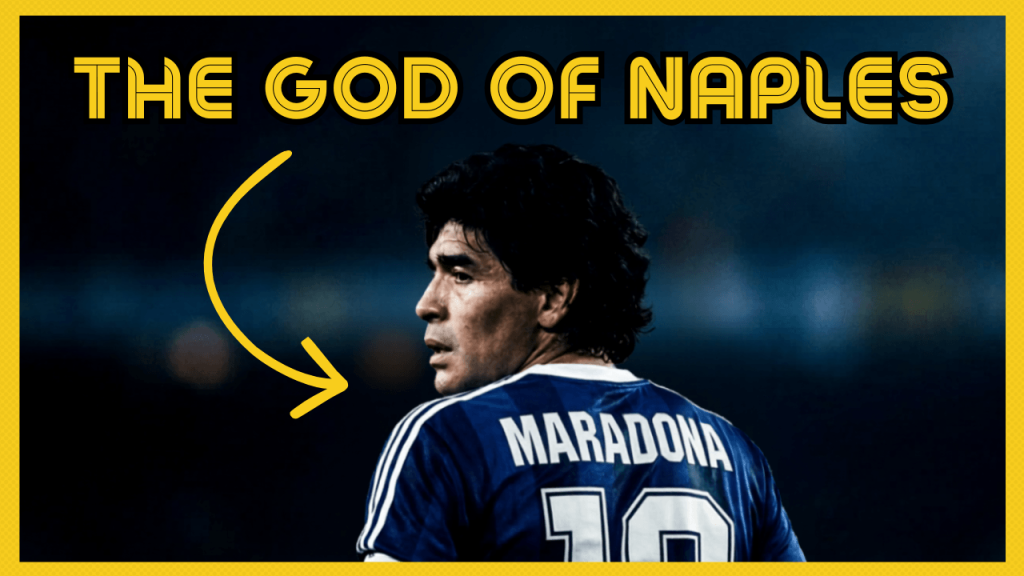
Diego Maradona: El Pibe de Oro, The Man Who Scored the Hand of God, the Goal of the Century, and Became Football’s Greatest Contradiction
He grew up with no running water in a shantytown on the edge of Buenos Aires, received a football as his third birthday gift and never put it down. He was the first son after four daughters, one of eight children in a house his father built with his own hands. He made his professional debut at fifteen, became the world’s most expensive footballer twice before the age of twenty-four, and then, in the space of four extraordinary minutes in Mexico City on 22 June 1986, scored the most controversial goal in World Cup history and the greatest goal in World Cup history, in the same game, against the same goalkeeper, four minutes apart.
He was banned twice from football for drug use. He tested positive for cocaine at Napoli in 1991, for ephedrine at the 1994 World Cup, and for banned substances at Boca Juniors in 1997. He was investigated for links to the Neapolitan Camorra. He left behind at least eight acknowledged children across three continents, a son in Naples he refused to recognise for seventeen years, and a religion, the Iglesia Maradoniana, with over 300,000 followers who worship him as a literal deity. He was declared a joint winner, alongside Pelé, of the FIFA Player of the Twentieth Century.
He died on 25 November 2020, two weeks after brain surgery, aged sixty. Argentina declared three days of national mourning. In Naples, the stadium already bore his name.
This is the full story of Diego Armando Maradona: El Pibe de Oro, the Golden Boy; D10S, the number ten rearranged into the Spanish word for God. The most complete expression of what football can be at its most extraordinary, and the most complete expression of what a human being can be at their most self-destructive. All in one person. All at the same time.
Watch the Maradona Documentary
Diego Maradona: The Life and Career of El Pibe de Oro
Key Facts
Quick context before you watch:
- Full Name: Diego Armando Maradona. Born 30 October 1960, Lanús, Buenos Aires Province (raised in Villa Fiorito, Buenos Aires). Died 25 November 2020, Tigre, Buenos Aires, aged 60.
- Nickname: El Pibe de Oro (“The Golden Boy”). Also known as D10S, the Spanish word for God (Dios) with his number 10 in place of the letter ‘o’.
- Position: Attacking midfielder (number 10).
- International: 91 caps, 34 goals for Argentina (1977-1994). Four World Cups (1982, 1986, 1990, 1994).
- Club Career: Argentinos Juniors (1976-81) → Boca Juniors (1981-82) → FC Barcelona (1982-84) → SSC Napoli (1984-91) → Sevilla (1992-93) → Newell’s Old Boys (1993-94) → Boca Juniors (1995-97).
- Major Honours: FIFA World Cup 1986 (Argentina, captain) | Serie A: 1986-87, 1989-90 (Napoli) | Coppa Italia 1987 (Napoli) | UEFA Cup 1989 (Napoli) | Copa del Rey 1983 (Barcelona) | Copa de la Liga 1983 (Barcelona) | Argentine Primera División 1981 (Boca Juniors)
- Individual Awards: FIFA World Cup Golden Ball 1986 | FIFA Player of the 20th Century (joint with Pelé, 2000) | FIFA World Youth Championship Golden Ball 1979 | Honorary Ballon d’Or (January 1995) | Retrospectively recognised by France Football as the worthy 1986 and 1990 Ballon d’Or winner in their 2016 reevaluation.
- First player to break the world transfer record twice: Barcelona 1982 (£5 million) and Napoli 1984 (£6.9 million).
- The Hand of God Goal: 22 June 1986, Argentina vs England quarter-final. Scored with his left fist. He confirmed it was deliberate, describing it as symbolic revenge for the Falklands War.
- The Goal of the Century: Same match, four minutes later. A 60-yard run from his own half, past five England outfield players and the goalkeeper. Voted Goal of the Century by FIFA in 2002.
- Drug Bans: 15-month ban (1991, cocaine, Napoli) | 15-month ban (1994, ephedrine, World Cup) | Third positive test 1997 led to retirement.
- Napoli Signing: At his Napoli presentation in 1984, 75,000 fans attended at the Stadio San Paolo.
- Napoli Goals Record: His Napoli goalscoring record of 115 goals stood until Marek Hamšík broke it in 2017.
- Napoli Stadium: The Stadio San Paolo in Naples was officially renamed the Stadio Diego Armando Maradona on 4 December 2020.
- Religion: An organised religion, the Iglesia Maradoniana, was founded in Argentina in 1998 and has over 300,000 followers worldwide.
- He was fouled 53 times during the 1986 World Cup, more than any other player. Against Italy in 1982, he was fouled 23 times in a single match.
Watch the Maradona Documentary
Diego Maradona: The Life and Career of El Pibe de Oro
Villa Fiorito: The Shantytown That Built a God
Diego Armando Maradona was born on 30 October 1960 in the Policlínico Evita hospital in Lanús, Buenos Aires Province, to a family who had moved from the northern province of Corrientes. His father, Diego Senior (known as Chitoro) worked in a chemicals factory and had played football for a local club. His mother, Dalma Salvadora Franco, known to everyone as Doña Tota, raised eight children in a small house Chitoro had built himself, on a plot of land in Villa Fiorito: a shantytown on the southern edge of Buenos Aires where the roads were dirt, the drainage was non-existent, and the only piped water was several blocks away. Maradona later described being sent as a boy to collect water in 20-litre jugs for his mother to cook and wash with. He was the fifth child and, at last, the first son after four daughters. He also had two younger brothers, Hugo and Raúl, both of whom would go on to play professional football.
He received his first ball as a gift at age three, from a cousin. He refused, it was said, to sleep without it.
Villa Fiorito was not simply poor: it was the kind of poor that most of the world the Maradona name would eventually reach could not imagine. Argentina in the 1960s and 1970s was lurching through cycles of military dictatorship, economic chaos, and social violence. The Buenos Aires shantytown was a world apart from the glamour of Europe’s football clubs that would one day compete for this child’s signature. But football was the great democratising force. On the dirt pitches of Fiorito, and specifically on the seven-a-side courts known as Las Siete Canchitas, Diego Maradona learned the game that would consume the rest of his life.
He was always the smallest. He was always the youngest. He was always the best.
Los Cebollitas, Argentinos Juniors and the Boy Who Made Coaches Check His ID
In 1969, aged eight, Maradona was recommended to Los Cebollitas (the Little Onions) the junior team of Buenos Aires club Argentinos Juniors. His coach, Francisco Cornejo, was so astonished by what he saw that he asked the child for his identification card. He simply could not believe the boy playing in front of him was that young. ‘He had the physique of a child,’ Cornejo later recalled, ‘but he played like an adult.’
Los Cebollitas became a national phenomenon. With Maradona at their centre, the team went on an unbeaten run of 136 consecutive games and claimed a national junior championship. Maradona, as halftime entertainment at Argentinos Juniors first-division matches, would take to the pitch alone and juggle a ball for the entire interval without letting it touch the ground: passes off his knees, his head, the outside of his foot, backheel flicks, nutmegs against invisible opponents. He was twelve years old. He was already famous in Buenos Aires.
On 20 October 1976, ten days before his sixteenth birthday, Maradona made his professional debut for Argentinos Juniors in the Argentine Primera División, becoming the youngest player to appear in the top flight of Argentine football. Within four months, he had made his senior international debut against Hungary on 27 February 1977, coming on as a substitute in the 62nd minute when Argentina were already winning 5-0. He became the youngest player to represent Argentina’s senior national team at the time.
At thirteen, a local newspaper had covered him for the first time after he scored all 23 goals in a 23-0 victory in a youth match. Now he was a professional. He was not yet sixteen.
The exclusion from the 1978 World Cup squad, where Argentina played on home soil and went on to win the tournament, devastated Maradona. He was seventeen. Coach César Luis Menotti’s decision to leave him out was later framed as protective: Maradona’s skeletal frame was still developing and a brutal World Cup campaign could have ended his career before it began. Maradona wept when he received the news. The wound never fully healed. He was at Argentinos Juniors from 1976 to 1981, scoring 115 goals in 167 appearances.
He repaid the hurt two years later. At the 1979 FIFA World Youth Championship in Japan, Maradona was the tournament’s star, scoring six goals in six games, collecting the Golden Ball as best player, and leading Argentina to a 3-1 final victory over the Soviet Union. He was eighteen years old. The world had been given notice.
Watch the Maradona Documentary
Diego Maradona: The Life and Career of El Pibe de Oro
Boca Juniors, the World Stage and the Cut from ’78
In February 1981, Maradona moved to the club he had always loved: Boca Juniors, the Buenos Aires club of the working class, the club his father supported. River Plate had offered more money; Maradona chose Boca. He won the Argentine championship (Metropolitano) in his first season. He scored 28 goals in 40 appearances. In June 1982, he departed for Europe: Barcelona had signed him for £5 million, a new world record transfer fee.
At the 1982 World Cup in Spain (Maradona’s first) Argentina arrived as defending champions. The tournament was a disappointment. They lost their opening game to Belgium. Internal tensions fractured the squad. And in a key second-round match against Brazil at Barcelona’s Estadio de Sarrià, with Argentina already 3-0 down, Maradona’s temper, routinely provoked by defenders who fouled him as the most effective way of stopping him, finally broke. He was sent off with five minutes remaining for a retaliatory kick on Brazilian midfielder Batista. He was twenty-one years old, and had just been red-carded from a World Cup. He would not be twenty-one again.
That tournament also contained a painful statistical reality: Maradona was fouled a recorded 23 times in the match against Italy alone. The systematic fouling of the most gifted player in the world was not merely a tactical response: it was a statement about how little the football establishment trusted the space he occupied.
Barcelona: Hepatitis, the Butcher of Bilbao and the Battle of Bernabéu
Barcelona in 1982 was not yet the dominant force it would become, and the pressure on Maradona from the moment he arrived (carrying a world record fee, a nation’s expectations, and a personality ill-suited to institutional constraints) was enormous. His first season was disrupted immediately: in December 1982 he was diagnosed with hepatitis. Barcelona struggled without him and were knocked out of the European Cup Winners’ Cup. When he returned, they won two domestic trophies (the Copa del Rey and the Copa de la Liga) including a moment that would become a recurring motif of his Barcelona career and his footballing legend: on 26 June 1983, in the first leg of the Copa de la Liga final at the Santiago Bernabéu, Maradona scored and received a standing ovation from Real Madrid fans. He was the first Barcelona player ever to be applauded that way by the Bernabéu, a distinction not matched until Ronaldinho in 2005 and Andrés Iniesta in 2015.
His second season produced something else entirely. On 24 September 1983, Athletic Bilbao visited the Camp Nou for a league match. The Basque defender Andoni Goikoetxea, who had already ended the career of Barcelona’s Bernd Schuster with a similar challenge, lunged at Maradona from behind and broke his ankle. The tackle was so violent and deliberate that it earned Goikoetxea the permanent nickname ‘the Butcher of Bilbao,’ and he was later reported to have kept the boot he wore during the tackle in a glass case at his home. Maradona heard the ankle snap. He described the sound as wood breaking.
He missed three months. He recovered. He returned. But the animosity between Maradona and Athletic Bilbao was now set in concrete. When the two clubs met in the 1984 Copa del Rey final at the Santiago Bernabéu in Madrid, in what would be Maradona’s last game for Barcelona, Athletic Bilbao won 1-0. Goikoetxea was again on the pitch, again fouling Maradona throughout, with taunts from opposition players and supporters that this time, in front of the King of Spain Juan Carlos and 100,000 fans, Maradona could not absorb. When the final whistle went, he attacked Athletic substitute Miguel Ángel Sola without warning, kneeing him in the face and leaving him unconscious on the turf. What followed was one of the most chaotic mass brawls in the history of Spanish football (players, staff, riot police) in a scene that became known as ‘the Battle of Bernabéu.’ More than half of Spain was watching on television.
Barcelona could not keep him. The relationship with club president Josep Lluís Núñez had been poisonous for months. Maradona had also made his first acquaintance with cocaine in Barcelona, a detail that would shadow everything that followed. He scored 38 goals in 58 games for the club, won two trophies, and left under a three-month ban from the Spanish FA that he never served, because in the summer of 1984 Napoli arrived with a new world record fee of £6.9 million. He went south. To the city that would finally understand him.
Naples: The City That Finally Understood Him
On 5 July 1984, Diego Maradona was presented to Napoli’s supporters at the Stadio San Paolo. Seventy-five thousand people turned out. A local newspaper had written that, despite the city lacking a mayor, adequate housing, functioning schools, reliable public transport, employment and sanitation, ‘none of this matters, because we have Maradona.’
It is one of the most precise summaries of what his arrival meant. Naples was a city the rest of Italy, particularly the wealthy industrial north, treated with barely concealed contempt. The clubs from Milan, Turin and Rome had dominated Italian football for decades; no club from southern Italy had ever won a Serie A title. Maradona was not merely a footballer to this city. He was a symbol: of the south’s pride, of the working-class’s capacity to produce something the establishment could not contain, of the pure audacity of talent over structure and money and privilege.
He responded to all of it. In his seven seasons at Napoli, Maradona led the club to the two Serie A titles they had never previously won (1986-87 and 1989-90), a Coppa Italia (1987), the UEFA Cup (1989) and a Supercoppa Italiana (1990). For the UEFA Cup final in 1989, Napoli beat VfB Stuttgart 5-4 on aggregate, with Maradona scoring in the second leg. He scored 115 goals in 259 appearances for the club, a record that stood until Marek Hamšík surpassed it in 2017. The club’s number 10 shirt was retired in his honour after his departure, a decision not revisited until regulatory changes forced otherwise.
The statistics, though, were almost beside the point. What Maradona did in Naples was something that can barely be quantified: he gave a city an identity. The ‘Ma-Gi-Ca’ attacking triad of Maradona, Bruno Giordano, and Brazilian forward Careca became one of the most celebrated forward lines in Italian football. But it was Maradona alone who commanded the city’s devotion, the city’s streets, and the city’s relationship with football, and, ultimately, with Italy itself. A relationship that would produce one of the most extraordinary scenes in World Cup history in 1990, in his own stadium, against his own country.
Below the surface, the cocaine addiction that had begun in Barcelona had hardened into something unmanageable. A former fitness trainer later described Maradona’s weekly cycle during the Napoli years: match on Sunday, cocaine binge from Sunday night through Wednesday morning, then clean living from Wednesday to Saturday. Week after week, season after season. That Maradona performed at the level he performed while living this way remains one of the most bewildering facts in the history of sport.
Watch the Maradona Documentary
Diego Maradona: The Life and Career of El Pibe de Oro
1986: The Hand, the Goal and the World
Mexico City. Estadio Azteca. 22 June 1986. Quarter-final: Argentina vs England.
The context was inseparable from the event. Four years earlier, Argentina and the United Kingdom had fought the Falklands War, a ten-week conflict that killed over 900 people. Argentina was defeated. The wound was still raw. This was football, but it was also something else: it was the match neither country could afford to lose, for reasons that went far beyond sport. Maradona understood this better than anyone. He said later that he had felt the match ‘as if we were playing out another war.’
The first half was goalless. Six minutes into the second half, Argentina’s left-back Julio Olarticoechea played the ball to Maradona, who laid it off to Jorge Valdano and made his run into the England half. The ball was deflected by England midfielder Steve Hodge back into the Argentine penalty area, high, awkward, floating. Maradona sprinted onto it as England goalkeeper Peter Shilton came off his line to claim it. Shilton was 185cm tall. Maradona was 165cm. There was no way, in a fair contest for a ball at head height, that Maradona could have won.
He raised his left arm above his head and punched the ball into the net with his left fist.
The Tunisian referee Ali Bin Nasser, positioned on the other side of the play, gave the goal. The linesman, who appeared to have seen the handball, did not flag. The England players protested furiously. Maradona ran away celebrating, later admitting: ‘I run out shouting “goal!” I look behind me to see if the referee had taken the bait. And he had.’ At the post-match press conference, his response was phrased for maximum deniability: the goal, he said, was scored ‘un poco con la cabeza de Maradona, y otro poco con la mano de Dios’, ‘a little with the head of Maradona and a little with the hand of God.’ The Hand of God: a phrase that immediately entered football’s permanent vocabulary.
Years later, he was more direct. ‘Now I can say what I couldn’t at that moment,’ he told television. ‘What hand of God? It was the hand of Diego. It was a little bit of mischief.’ He also linked it explicitly to the Falklands War, describing the goal as ‘symbolic revenge for what they did to us’, and said he knew it was his hand but could not reach the ball any other way, so he did what he did, because the moment required it. Some called it cheating. Some called it viveza criolla, the Argentine tradition of native cunning, of winning by any means when the powerful have set the rules against you. Both things were true.
Four minutes later came the Goal of the Century.
Argentina recovered the ball in midfield. It reached Maradona just inside his own half, wide on the right. He set off. He accelerated past Peter Beardsley. He dummied past Peter Reid. He pushed it past Terry Butcher. He wrong-footed Terry Fenwick. He went past Butcher again. He shaped to shoot; Shilton committed, went down; Maradona rounded him and rolled the ball in. Sixty yards. Ten seconds. Five outfield players. One goalkeeper. All beaten. Victor Hugo Morales, the Uruguayan commentator calling the match for radio, lost his composure entirely: ‘Cosmic kite, what planet are you from, to leave so many Englishmen in your wake? … Thank you, God, for football! For Maradona! For these tears!’
Gary Lineker, England’s striker, watched it happen. ‘When Diego scored that second goal against us, I felt like applauding. It was impossible to score such a beautiful goal. He’s the greatest player of all time, by a long way. A genuine phenomenon.’ Bobby Robson, England’s manager, was more contained: ‘A brilliant goal. I didn’t like it but I had to admire it.’
In 2002, FIFA asked fans around the world to vote for the Goal of the Century. The goal against England won by a distance.
Argentina beat Belgium 2-0 in the semi-final (two more Maradona goals) and faced West Germany in the final. Argentina led 2-0 through José Luis Brown and Jorge Valdano, West Germany pulled level through Karl-Heinz Rummenigge and Rudi Völler, and then, with seven minutes remaining, Jorge Burruchaga received Maradona’s decisive through-ball and scored the winner to make it 3-2. Maradona won the Golden Ball as the tournament’s best player, finishing with five goals and five assists. He played every minute of every game. He was fouled 53 times across the tournament, more than any other player. The defenders had no other answer.
He was twenty-five years old, and he had just delivered the greatest individual World Cup performance in the history of the sport.
The 1990 World Cup: Naples vs Italy and the Tears in Rome
If 1986 was Maradona at his absolute peak, 1990 was something far more complicated: a tournament in which he dragged an average Argentina team to the World Cup final through willpower, guile, and the heroics of goalkeeper Sergio Goycochea in penalty shootouts, all while playing the knockout stages with a swollen left ankle and inflamed right foot. He produced almost nothing in individual brilliance. He manufactured one of the most remarkable scenes in football history.
Argentina arrived in Italy as defending champions but were unconvincing from the start. They lost their opening group game to Cameroon, scraped through, and relied on Goycochea’s saves in shootouts to eliminate Yugoslavia and Italy. And then, in the semi-final on 3 July 1990, they came to Maradona’s city.
The match was played at the Stadio San Paolo, Napoli’s ground, Maradona’s ground. His city. But the opponents were Italy, the host nation, and the crowd was deeply divided. On the eve of the match, Maradona gave a press conference that became immediately notorious. He reminded Neapolitans that for 364 days of the year, Italy called them foreigners in their own country, called them ‘terroni’, a derogatory term for southerners. He appealed to their civic identity over their national one. The Italian press was outraged. Banners at the San Paolo the following evening read: ‘Diego, we love you, but Italy is our homeland.’
In the match, Argentina came from behind (Toto Schillaci scored in the 17th minute) to equalise through Caniggia in the 67th, with Maradona involved in the build-up. Extra time produced nothing. In the penalty shootout, Maradona scored his penalty, and Goycochea saved from Roberto Donadoni and then Aldo Serena. Argentina were through. The San Paolo fell into silence as the Argentine players celebrated. He had asked his city to choose between him and their country. Something close to half of them had.
Argentina lost the final in Rome 1-0 to West Germany. Argentine defender Roberto Sensini was adjudged to have fouled Rudi Völler in the penalty area in the 85th minute (a penalty widely disputed) and Andreas Brehme converted it. The Argentine bench erupted in fury. Argentina finished the match with nine men, Pedro Monzon and Gustavo Dezotti both having been sent off. At the final whistle, Maradona, who had been man-marked by Lothar Matthäus throughout and contributed almost nothing on the pitch, stood and wept. The crowd jeered him openly. He accused the referee of corruption. He accused FIFA of wanting Italy and Germany in the final. The tears were real. Everything else was theatre, or smoke.
The Fall at Napoli: Cocaine, the Camorra and a 15-Month Ban
On 17 March 1991, Maradona tested positive for cocaine following a Serie A match against Bari. He was handed a 15-month ban from all football by the Italian authorities. He would never play for Napoli again.
His departure from Naples was not clean. By 1991, the cocaine addiction that had been building throughout his time in the city was no longer a secret. Italian police were already investigating his connections to the Camorra (the Neapolitan organised crime network, specifically the clan of boss Carmine Giuliano) and the drugs that had flowed through those connections. Later in 1991, he was arrested in Buenos Aires on charges of cocaine possession and trafficking. There was also a paternity case: Diego Sinagra, born in Naples in September 1986, was the son Maradona refused for years to acknowledge. Italian courts ruled in the child’s favour in 1993. The two finally met in 2003, when Diego Junior found his way onto a golf course where Maradona was playing.
The response to the cocaine ban was characteristic: Maradona claimed it was revenge for Argentina knocking Italy out of the World Cup on Italian soil. There may have been some truth in the timing (the Italian establishment’s appetite for punishing him was probably real) but the test was positive. The result stood.
Maradona was, at thirty years old, football’s most electrifying talent and its most self-destructive personality simultaneously. The drug had him. He told journalists: ‘Cocaine isn’t good for being on the pitch. It’s useless in life. I was a drug addict, I am a drug addict and I always will be a drug addict in everyone’s eyes. Because drug addicts aren’t forgiven for anything.’
The 1994 World Cup: Redemption and Catastrophe
The narrative of the 1994 World Cup, as far as Maradona was concerned, was one of the most spectacular rises and falls compressed into the smallest possible window of time.
By 1993, he was playing for Newell’s Old Boys in Argentina, appearing only five times. He was overweight, depressed, and widely written off. Then something happened. He linked up with Daniel Cerrini, an Argentine bodybuilder and fitness trainer, and submitted to an intense programme of exercise, strict diet and (it would later become apparent) pharmacological assistance. In a matter of months he had shed over ten kilograms and looked, to many observers, like a reanimated version of himself.
Argentina’s qualification for the 1994 World Cup had been troubled: they needed play-offs against Australia to secure their place. But Maradona was back. He scored in the first qualifier he appeared in. He reclaimed the captain’s armband. He was thirty-three years old and apparently, impossibly, relevant again.
In their opening group game against Greece in Boston, he scored a goal and wheeled away in celebration with his face contorted into something barely human, a mask of wild, straining intensity, his eyes enormous, his expression the face of a man not merely celebrating a goal but operating somewhere beyond the ordinary reach of physiology. ‘His contorted features,’ The Guardian wrote, ‘made him look like a lunatic, flying on a cocktail of adrenalin and every recreational drug known to man.’
After the 2-1 win against Nigeria that followed (the second group game) Maradona was selected for routine drugs testing. Five days later, the results came back. He had tested positive for five variants of ephedrine, a stimulant banned by FIFA. The FIFA medical committee was explicit: ‘Maradona must have taken a cocktail of drugs because the five identified substances are not found in one medicine.’ He was immediately expelled from the tournament. His second 15-month ban began.
Maradona’s explanation (that he had run out of his Argentine supply of a supplement drink called Rip Fuel, which contained no ephedrine, and bought the American version, which did) was not entirely implausible. It was also not entirely plausible. FIFA concluded it was deliberate. Argentina, rocked, lost their final group game to Bulgaria and went out in the round of sixteen to Romania. Maradona never played for his country again. The match against Nigeria was his 91st and final international cap.
He was escorted from the tournament, visibly distraught, on Argentine television: ‘They cut off my legs,’ he said. ‘With this decision, they have forced me to give up football forever.’
Watch the Maradona Documentary
Diego Maradona: The Life and Career of El Pibe de Oro
Late Career, Reinvention and the Coaching Years
It was not, of course, the end. Maradona retired (and unretired) repeatedly. He returned to play for Sevilla in Spain (1992-93), Newell’s Old Boys in Argentina (1993-94), and finally, inevitably, Boca Juniors (1995-97). The final Boca stint produced moments of genuine quality, but in 1997 a third positive drugs test at Boca brought the playing career to its actual end. He was thirty-six years old. He retired in October 1997.
The years that followed were harrowing. He gained enormous weight, at his heaviest reportedly approaching 130 kilograms. In April 2004, he suffered two heart attacks in a single month in Buenos Aires, both linked to cocaine use. He was put on a respirator. There were periods where those around him genuinely feared he would not survive. He was treated in Cuba, where he had developed a friendship with Fidel Castro that was itself a statement of political identity, at a centre for addiction treatment. In March 2005, gastric bypass surgery in Cartagena, Colombia dramatically reduced his weight. He emerged, visibly transformed, from his most acute crisis.
In 2008 (and this remains one of the stranger decisions in Argentine football history) he was appointed manager of the Argentina national team. He had almost no coaching experience: brief, unsuccessful spells at two small Argentine clubs a decade earlier had produced three wins in total. But he was Maradona. The Argentine Football Association believed that what he had done as a player could somehow be transmitted to the players around him.
The qualification campaign for the 2010 World Cup was, in footballing terms, a disaster. Argentina suffered a 6-1 defeat to Bolivia, equalling the country’s worst ever margin of defeat. They lost to Colombia, Paraguay, and Brazil. They arrived at the final two qualifiers needing wins to reach South Africa. Maradona belly-slid across a soaking pitch in celebration when they made it. At the subsequent press conference, he delivered one of football management’s most celebrated verbal eruptions: he told journalists to ‘suck it and keep sucking,’ grabbed his crotch, and was subsequently banned by FIFA for two months.
The 2010 World Cup itself was briefly joyful. Argentina won all three group games, beat Mexico 3-1 in the last sixteen, and Maradona was a spectacle on the touchline, bouncing, embracing, sliding, weeping, shouting. And then Germany arrived in the quarter-final and scored four goals without reply. Maradona was gone as manager three weeks later. ‘It was much easier being a player,’ he admitted afterwards. ‘I only thought about getting the ball and enjoying myself.’
After the Argentina role, he took coaching positions in Dubai (Al Wasl, 2011-12), Fujairah in the UAE (2017), and, his most romantically improbable coaching post, Dorados de Sinaloa in Mexico’s second division (2018-19), where he arrived to great fanfare and briefly led the club toward promotion. His final role was at Gimnasia de La Plata in Argentina, which he took in September 2019 and was still coaching at the time of his death.
Death, Legacy and the Religion That Bears His Name
On 3 November 2020, Diego Maradona underwent emergency brain surgery to remove a subdural haematoma (a blood clot on the brain) at a private clinic in Buenos Aires. The surgery was declared successful. He was moved to a rented property in Tigre, north of Buenos Aires, to recover. Medical staff were assigned to his care around the clock.
On 25 November 2020 (the feast day of St Catherine of Alexandria, and by coincidence the same date on which both George Best and Fidel Castro had died) Diego Maradona suffered a cardiorespiratory arrest at the property and was pronounced dead. He was sixty years old. His official cause of death was ‘acute secondary lung oedema to exacerbated chronic heart failure.’ His carers had, according to a subsequent investigation, failed to monitor him adequately in the final hours.
Eight members of his medical team, including his neurosurgeon and psychiatrist, were charged with negligent homicide. The trial was still underway as of March 2026.
Argentina declared three days of national mourning. President Alberto Fernández appeared on national television to announce it. Maradona’s body lay in state in the Casa Rosada (Argentina’s presidential palace) where an estimated 120,000 people filed past to pay their respects. In Naples, fans gathered outside the Stadio San Paolo. On 4 December 2020, the stadium was officially renamed the Stadio Diego Armando Maradona.
The Iglesia Maradoniana (the Church of Maradona) had been founded in Argentina in 1998 by a group of fans who argued, not entirely tongue in cheek, that God had revealed himself to football through this particular man from Fiorito. By 2020, the church had over 300,000 followers worldwide. It had its own version of the Lord’s Prayer: ‘Our Diego who art on earth, hallowed be thy great left foot.’
The number 10. D10S. The hand. The goal. The tears in Rome. The cocaine. The comeback. The city that built a stadium in his name. The religion. All of it true, simultaneously, in the same life.
Legacy: Why Maradona Still Matters
The most important question about Diego Maradona is not the one about Pelé. ‘Who is the greatest of all time?’ is a question that can be debated indefinitely, without resolution, and has been. Maradona and Pelé shared the FIFA Player of the Twentieth Century award because neither the history of football nor its administrators could satisfactorily rank one above the other. Lionel Messi’s career has added a third figure to the debate. It is not a debate worth resolving. It is simply a list of human beings who played football in a way that altered how the rest of us understood what the game could be.
Maradona’s specific legacy is different from Pelé’s, and different from Messi’s, in a way that goes beyond football. Pelé was grace; Messi is precision; Maradona was electricity. He could do what neither of them could do: lose himself entirely to the moment, follow the logic of instinct to its absolute extreme regardless of rules, context, or consequences, and in doing so produce things that players and coaches and administrators and fans had never previously imagined were possible.
The Hand of God was cheating. It was also, at some level, a statement: that for a boy from Villa Fiorito, growing up without running water in a city the world had forgotten, the rules that protected the powerful were not his rules. He played the game of viveza criolla. He did what the streets had taught him: you find the advantage, you take it, you run away celebrating. Four minutes later he did it again, and this time no one could call it anything but the greatest thing any player had ever done.
The complications are not incidental to the legacy: they are the legacy. Maradona’s addiction to cocaine, the children he did not acknowledge, the money he lost, the paranoia, the grandiosity, the willingness to endorse authoritarian leaders, the press conferences that lurched between genius and self-pity, all of this is part of the same person who stood at the Azteca in 1986 and briefly convinced the world that one human being could be capable of anything. He is also, almost certainly, the only player in football history who won a World Cup essentially by himself, dragging a squad of limited players past team after team through sheer force of individual will.
Lionel Messi said after his death: ‘A very sad day for all Argentines and for football. He leaves us but he will never go, because Diego is eternal.’ This was true. It was also insufficient. Maradona was not eternal in the way of monuments or clean legacies. He was eternal in the way of contradictions that could not be resolved, the way the Hand of God and the Goal of the Century were eternal: two completely opposing things, produced four minutes apart, that between them said everything that needed to be said about what a human life at the limits of its own capacity actually looks like.
Watch the Maradona Documentary
Diego Maradona: The Life and Career of El Pibe de Oro
Frequently Asked Questions (FAQs)
Who is Diego Maradona and why is he considered one of the greatest footballers of all time?
Diego Armando Maradona (1960-2020) was an Argentine footballer widely regarded as one of the two greatest players in the history of the sport, sharing the FIFA Player of the 20th Century award with Pelé. A physically small attacking midfielder who played with extraordinary vision, dribbling ability, passing range and goal-scoring instinct, he led Argentina to their second World Cup in 1986 in Mexico, where his individual performance (five goals, five assists, every minute played) is considered the finest single-tournament performance in the competition’s history. He also transformed Napoli into the dominant force in Italian football, winning the club its only two Serie A titles. His off-field life (drug addiction, controversy, and a personality of extreme contradictions) is as much a part of his legacy as his football.
What was the Hand of God goal scored by Diego Maradona?
The Hand of God goal was scored by Diego Maradona for Argentina against England in the 1986 World Cup quarter-final at the Estadio Azteca in Mexico City on 22 June 1986. With the scores level at 0-0 in the 51st minute, a deflected ball dropped in the Argentine penalty area. Maradona, outjumped by England goalkeeper Peter Shilton, punched the ball into the net with his left fist. The Tunisian referee, positioned on the other side of the play, did not see the handball and gave the goal. At the post-match press conference, Maradona described it as scored ‘a little with the head of Maradona and a little with the hand of God.’ He later confirmed explicitly that it was intentional, that he had deliberately used his hand, and described it as symbolic revenge for Argentina’s defeat in the 1982 Falklands War.
What was Diego Maradona’s Goal of the Century?
The Goal of the Century was Maradona’s second goal against England in the same 1986 World Cup quarter-final, scored four minutes after the Hand of God. Receiving the ball near his own half, Maradona accelerated and dribbled past five England outfield players: Peter Beardsley, Peter Reid, Terry Butcher (twice), and Terry Fenwick, before rounding goalkeeper Peter Shilton and rolling the ball into the net. The entire run covered approximately 60 yards and took around ten seconds. In 2002, FIFA asked fans worldwide to vote for the greatest goal in World Cup history. The goal against England won. Gary Lineker, England’s striker, said afterwards: ‘When Diego scored that second goal against us, I felt like applauding. He’s the greatest player of all time, by a long way.’
Why was Maradona’s 1986 World Cup performance considered so significant?
Maradona’s 1986 World Cup performance is considered the single greatest individual tournament in the competition’s history. He played every minute of all seven of Argentina’s games, scored five goals and made five assists, and was the decisive player in virtually every match. He scored twice against England in the quarter-final (the Hand of God and the Goal of the Century), twice against Belgium in the semi-final, and his through-ball set up Jorge Burruchaga’s 83rd-minute winner in the 3-2 final victory over West Germany. He won the Golden Ball as best player. He was fouled 53 times across the tournament. Argentina had a modest squad; without Maradona, they would almost certainly not have progressed beyond the early rounds.
What did Diego Maradona achieve at Napoli?
Maradona joined Napoli in 1984 for a then world record fee of £6.9 million and spent seven seasons transforming a club that had never previously won the Serie A title into the dominant force in Italian football. During his time at Napoli, the club won two Serie A titles (1986-87 and 1989-90), the Coppa Italia (1987), the UEFA Cup (1989) and the Supercoppa Italiana (1990). Maradona scored 115 goals in 259 appearances, a club record that stood until Marek Hamšík surpassed it in 2017. He was, for Neapolitans, far more than a footballer: he was a symbol of the south’s pride against the contempt of the Italian establishment, an icon of working-class identity. The Stadio San Paolo in Naples was renamed the Stadio Diego Armando Maradona after his death in 2020.
Why was Maradona banned from football for 15 months in 1991?
On 17 March 1991, following a Serie A match against Bari, Diego Maradona tested positive for cocaine. He was banned from all football for 15 months by Italian football authorities, a ban FIFA extended globally. He never played for Napoli again. The addiction to cocaine, which Maradona himself later acknowledged had begun during his time at Barcelona in 1983, had been an open secret in Italian football and law enforcement circles for several years. Maradona linked the ban to Argentina’s defeat of Italy in the 1990 World Cup semi-final on Italian soil, arguing the Italian establishment wanted revenge. The test, however, was positive, and the ban stood.
What happened to Maradona at the 1994 World Cup?
After losing his captaincy and missing two and a half years of international football following his 1991 cocaine ban, Maradona made a dramatic return for the 1994 World Cup in the United States. He scored in Argentina’s opening win over Greece. But after the second group game against Nigeria, FIFA’s random drugs test found five variants of ephedrine (a banned stimulant) in his urine sample. He was expelled from the tournament and given a second 15-month ban. Maradona claimed he had inadvertently ingested ephedrine via a US-brand version of a dietary supplement drink. FIFA concluded the cocktail of five substances pointed to deliberate doping. The cap against Nigeria was Maradona’s 91st and final one for Argentina.
What was the significance of the 1990 World Cup semi-final between Argentina and Italy?
The 1990 World Cup semi-final on 3 July 1990, played at Maradona’s club ground the Stadio San Paolo in Naples, pitted host nation Italy against Argentina. The remarkable element was Maradona’s pre-match appeal to the Neapolitan crowd to support Argentina rather than their own national team, on the grounds that Naples had always been treated as a second-class city by the rest of Italy. The crowd was visibly divided. Argentina recovered from 0-1 down to draw 1-1 and won on penalties, with goalkeeper Goycochea saving from Roberto Donadoni and Aldo Serena. The match is celebrated in football history as a defining example of Maradona’s ability to turn football into something that went far beyond sport, exploiting cultural and political fault lines with precision.
How did Diego Maradona die?
Diego Maradona died on 25 November 2020 at a rented property in Tigre, Buenos Aires, at the age of sixty. The official cause of death was ‘acute secondary lung oedema to exacerbated chronic heart failure.’ He had undergone emergency brain surgery two weeks earlier to remove a blood clot and had been discharged to a private residence to recover. Eight members of his medical care team were subsequently charged with negligent homicide, accused of failing to adequately monitor him in his final hours, a trial that remained ongoing as of March 2026. A separate medical report suggested his death may have been connected to cocaine use. Argentina declared three days of national mourning; his body lay in state at the Casa Rosada.
What was Diego Maradona’s relationship with Pelé and who is considered the greatest player of all time?
Diego Maradona and Pelé shared the FIFA Player of the 20th Century award in 2000, a joint result that acknowledged neither could be ranked above the other on the totality of their achievements. Maradona won his individual honours with a club (Napoli) that would not otherwise have featured at the top of world football, and captained an Argentina team that depended on him to a degree arguably unmatched in World Cup history. Pelé won three World Cups with a Brazil side of considerable collective quality. Their relationship was complex and at times personal: Pelé was consistently more complimentary about Messi than about Maradona, and Maradona consistently argued for his own superiority. Lionel Messi’s subsequent career has added a third serious candidate to the debate. There is no consensus answer, and there probably never will be.
What clubs did Diego Maradona play for during his career?
In chronological order: Argentinos Juniors (Argentina, 1976-81, where he made his professional debut at fifteen), Boca Juniors (Argentina, 1981-82), FC Barcelona (Spain, 1982-84), SSC Napoli (Italy, 1984-91), Sevilla (Spain, 1992-93), Newell’s Old Boys (Argentina, 1993-94), and Boca Juniors again (Argentina, 1995-97). He retired from playing in October 1997 following his third positive drugs test. His most celebrated period was at Napoli, where he spent seven seasons and led the club to its greatest era in history. He also won two domestic trophies with Barcelona in an injury-disrupted two-year spell, and the Argentine championship with Boca Juniors in 1981.
What was the Iglesia Maradoniana and who was involved?
The Iglesia Maradoniana (the Church of Maradona) is an organised religion founded in Argentina in 1998 by a group of fans who declared Maradona a divine figure. The church counts the year of Maradona’s birth as Year Zero of its calendar; it has its own commandments, its own version of the Lord’s Prayer (‘Our Diego who art on earth, hallowed be thy great left foot’), and its own religious texts. By 2020, the church had over 300,000 followers worldwide. The church was not founded or endorsed by Maradona himself, but he was aware of its existence and expressed neither serious objection nor embarrassment. The phenomenon reflected the extremity of his cultural significance in Argentina and among football supporters globally.
Why was Diego Maradona left out of the 1978 World Cup?
Diego Maradona was left out of Argentina’s 1978 World Cup squad by coach César Luis Menotti, despite being considered one of the best players in the country at seventeen. Menotti’s stated reason was protective: he believed Maradona’s skeletal frame was still developing, that the physical and psychological demands of a World Cup campaign could cause serious injury, and that exposing him to that level of pressure at seventeen was a risk not worth taking. Maradona was devastated (he wept when he received the news) and never fully forgave the decision. Argentina won the tournament on home soil without him. The exclusion is considered one of the great ‘what if’ moments in World Cup history.
What was the Butcher of Bilbao incident involving Maradona?
On 24 September 1983, during a league match at the Camp Nou between FC Barcelona and Athletic Bilbao, Basque defender Andoni Goikoetxea tackled Maradona from behind, breaking his ankle. Maradona described hearing it snap like wood breaking. The tackle was so violent and deliberate that it earned Goikoetxea the permanent nickname ‘the Butcher of Bilbao.’ Goikoetxea was given a ten-game ban, considered lenient by most observers, and was later reported to have kept the boot he wore during the tackle in a glass case at his home. Maradona missed three months. Barcelona coach César Luis Menotti called for a lifetime ban. Goikoetxea had already ended the career of Barcelona’s Bernd Schuster with a similar challenge two years earlier.
What was Diego Maradona’s record as Argentina manager?
Maradona was appointed Argentina manager in November 2008 with almost no coaching experience. His qualification campaign for the 2010 World Cup was turbulent: Argentina suffered a 6-1 defeat to Bolivia (equalling their worst ever margin of defeat), lost to Colombia, Paraguay, and Brazil, and only secured qualification in their final two games. A foul-mouthed press conference celebrating qualification led to a two-month FIFA ban. At the 2010 World Cup, Argentina won all three group games and beat Mexico in the last sixteen before being beaten 4-0 by Germany in the quarter-final. Maradona’s contract was not renewed following the tournament.
How did Diego Maradona’s time at Barcelona compare to his time at Napoli?
Maradona’s two seasons at Barcelona (1982-84) were largely marked by misfortune and conflict: hepatitis in his first season, a broken ankle from the Goikoetxea tackle in his second, an acrimonious relationship with club president Josep Lluís Núñez, and a final game that ended in a mass brawl at the Santiago Bernabéu. He scored 38 goals in 58 games and won two trophies (Copa del Rey and Copa de la Liga). Napoli (1984-91) was the opposite: seven seasons, 115 goals in 259 appearances, two Serie A titles, a UEFA Cup, and a Coppa Italia. He was worshipped in Naples in a way he was never worshipped in Barcelona, and the city became genuinely inseparable from his identity as a person and a footballer.
Was Diego Maradona’s Hand of God goal scored intentionally?
Yes. Maradona confirmed on multiple occasions that the goal was intentional, that he deliberately struck the ball with his left fist and then ran away celebrating while checking whether the referee had seen it. His famous post-match phrase (‘a little with the head of Maradona and a little with the hand of God’) was a deliberate obfuscation. Years later he dropped the pretence entirely: ‘Now I can say what I couldn’t at that moment: what hand of God? It was the hand of Diego.’ He described the goal as symbolic revenge for Argentina’s defeat in the 1982 Falklands War, and as an expression of viveza criolla, the Argentine philosophy of winning by cunning when the rules are set against you. English players at the time were certain it was handball; the goal stood because the officials had not seen the infringement.
What connection did Maradona have to the Neapolitan Mafia, the Camorra?
During his time at Napoli, Maradona developed connections to the Camorra, specifically to the clan of boss Carmine Giuliano, that were investigated by Italian police following his 1991 cocaine ban. The connections related primarily to the supply of cocaine and the world of parties and nightlife that Maradona inhabited in Naples. Maradona later acknowledged that the drugs he used were ‘practically brought to him on a tray’ during this period, though he did not explicitly name sources. The Italian authorities’ investigation into his Camorra connections was one of the factors that made his continued presence in Italy untenable after the ban. It is one of the more troubling chapters of a career that was never short of controversy.
Did Diego Maradona ever win the Ballon d’Or?
No, but not for the reason often stated. Maradona did not win the Ballon d’Or because, from 1956 until 1995, the award was restricted to players holding European nationality or citizenship. Since Maradona held an Argentine passport, he was ineligible, despite spending nine years playing club football in Spain and Italy. He was the best player in the world for most of the period from 1984 to 1990, and would almost certainly have won it multiple times under modern eligibility rules.
In January 1995, France Football awarded him an honorary Ballon d’Or (the Golden Ballon d’Or) recognising his career achievement and the fact that the rules had made it impossible for him to be considered during his prime. Additionally, when France Football published a retrospective reevaluation in 2016 to coincide with the award’s 60th anniversary, applying international eligibility to the pre-1995 era, Maradona was recognised as the worthy winner in both 1986 and 1990, though the official winners from those years remained unchanged.
What other Football Mavericks documentaries has The Football Documentary Channel made?
The Football Mavericks series on The Football Documentary Channel explores the careers of football’s most brilliant, unconventional, and boundary-pushing players, those who changed what was possible on a pitch and left the game permanently different from how they found it. Alongside Diego Maradona, the series covers Ronaldinho: the Brazilian wizard who earned a standing ovation at the Bernabéu and became the only player to win a World Cup, Copa América, Confederations Cup, Champions League, Copa Libertadores and Ballon d’Or; René Higuita: the Colombian goalkeeper who invented the sweeper-keeper, acted as a cartel ransom courier, and produced the Scorpion Kick at Wembley; Jay-Jay Okocha: the Nigerian genius who dribbled past Oliver Kahn and carried Bolton Wanderers to a cup final; and Eric Cantona: the French maverick who won everything, kicked a fan, and walked away at thirty. All documentaries are free to watch at youtube.com/@footballdocumentaries.
Why was Maradona such an important figure for the city of Naples?
Naples in the 1980s was the poorest major city in Western Europe, governed partly by the Camorra organised crime network, and treated with contempt by Italy’s wealthier north. Maradona was not merely a footballer to the city; he was a symbol of the south’s pride, of the working class’s capacity to produce something the establishment could not contain. The titles he delivered felt like acts of social justice. He was worshipped there in a way no footballer before or since has been worshipped in a single city, not as a sports star, but as something approaching the divine.
Is Maradona considered better than Lionel Messi?
In Argentina, the debate between Maradona and Messi was one of football’s most fiercely contested until Messi’s 2022 World Cup victory in Qatar. For many Argentines, Maradona’s 1986 achievement (winning the World Cup essentially alone, carrying a limited squad through seven matches on individual genius) carries a mythological weight that transcends statistics. Messi’s 2022 triumph closed the gap significantly for those who had always considered the trophy the missing piece. There is no consensus answer.
Did Diego Maradona ever manage a football team?
Yes. Maradona had several managerial stints. The most prominent was his appointment as Argentina national team manager in 2008, during which he qualified them for the 2010 World Cup in dramatic fashion before a 4-0 quarter-final defeat to Germany in South Africa ended his tenure. He also managed clubs including Al Wasl in Dubai, Dorados de Sinaloa in Mexico’s second division (where he notably led the team toward promotion), and his final role at Gimnasia de La Plata in Argentina, which he held until his death.
What was Diego Maradona’s connection to organised crime in Naples?
During his time at Napoli, Maradona developed associations with the Camorra, specifically to the clan of boss Carmine Giuliano, that were investigated by Italian police following his 1991 cocaine ban. The connections related primarily to the supply of cocaine and the world of parties that Maradona inhabited in Naples during the late 1980s. Maradona later acknowledged that cocaine had been “practically brought to him on a tray” during this period. The Camorra connections were among the factors that made his continued presence in Italy untenable after the ban.
What does the Diego Maradona documentary on The Football Documentary Channel cover?
The TFDC documentary explores Maradona’s life from Villa Fiorito to the World Cup in Mexico, through the god-like years in Naples and the disgrace of the 1994 World Cup exit. It examines the two goals against England that define his legacy, the cocaine addiction that ran through his career, and what it meant to carry a city on your shoulders. It is free to watch at youtube.com/@footballdocumentaries. The full companion deep dive (covering his complete career from Argentinos Juniors to Boca, career statistics, and all important FAQs) is at footballdocumentaries.com/diego-maradona/.