Diego Maradona: The Hand of God, the Goal of the Century, and the Weight of a Nation
On 22 June 1986, in Mexico City’s Estadio Azteca, Diego Maradona scored two goals against England in the space of four minutes. The first he punched in with his left hand, deliberate, undetected by the referee, later described as “the hand of God.” The second was a 60-metre solo run past five outfield players and the goalkeeper that was voted the Goal of the Century by FIFA in 2002. Argentina won 2-1. They went on to win the World Cup.
In those two goals, in the gap between them, lies the complete truth about Diego Maradona. Cheat and genius. The worst thing possible in football and the best thing ever witnessed in football, four minutes apart.
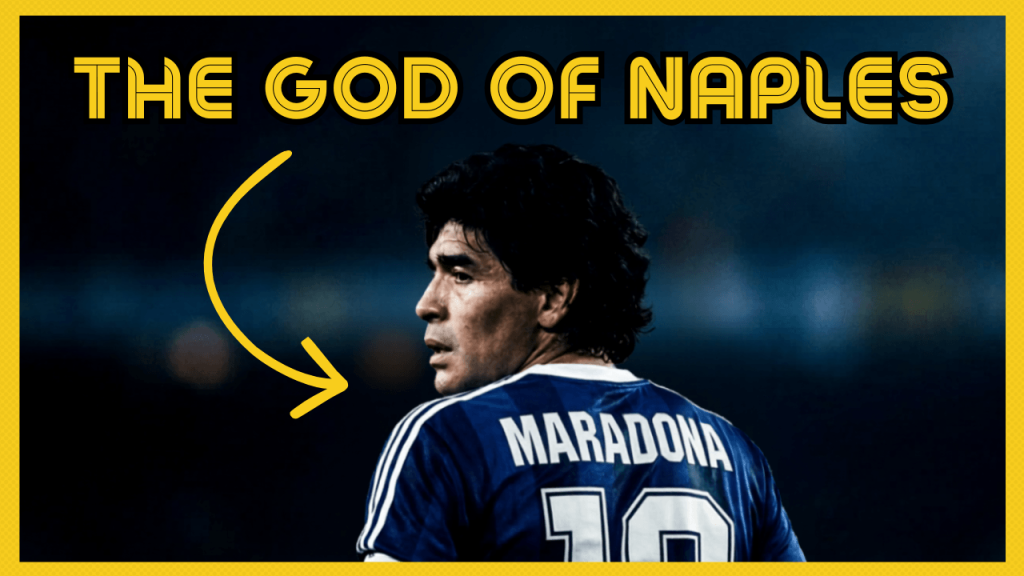
He grew up in Villa Fiorito, a shantytown on the edge of Buenos Aires where the roads were dirt and running water required a walk. He received his first football at age three and refused to sleep without it. He made his professional debut at fifteen. He became the most expensive footballer in the world twice before he was 24. He led Napoli, a city sneered at by Italy’s wealthier north, to their first two Serie A titles. He was worshipped there as something approaching a deity.
He died on 25 November 2020, aged 60. Argentina declared three days of national mourning. In Naples, the stadium already bore his name.
Key Facts
Quick context before you watch:
- Born: 30 October 1960, Lanús, Buenos Aires; died 25 November 2020, Tigre
- Clubs: Argentinos Juniors, Boca Juniors, Barcelona, Napoli, Sevilla, Newell’s Old Boys, Boca Juniors (second spell)
- World Cup: 1986 winner and Golden Ball (best player): five goals, five assists, every minute played; regarded as the greatest individual tournament in the competition’s history
- Napoli: two Serie A titles (1986-87 and 1989-90), Coppa Italia (1987), UEFA Cup (1989), still the only major honours in the club’s history
- The Hand of God Goal: 22 June 1986, 51st minute, Argentina vs England
- The Goal of the Century: same match, 55th minute, voted greatest World Cup goal in history by FIFA (2002)
- Drug Bans: 15 months (1991, cocaine), 15 months (1994, ephedrine at World Cup); third positive test at Boca in 1997 ended his playing career
- Stadium Named: Stadio Diego Armando Maradona (formerly San Paolo), renamed 4 December 2020
- The Church of Maradona: The Iglesia Maradoniana: founded 1998; over 300,000 followers worldwide
Watch the Maradona Documentary
El Pibe de Oro: Early Life and Football Career
Naples, 1986 and the Two Goals That Define a Career
To understand what Maradona meant to Naples requires understanding what it meant to be from Naples in the 1980s. It was the poorest major city in Western Europe, controlled in significant part by the Camorra, and treated with unconcealed contempt by Italy’s industrial north. When Maradona arrived at the Stadio San Paolo in July 1984 (with a then-world record fee of £6.9m) 75,000 people turned up for his presentation. Not a match. A presentation.
The titles he delivered in 1987 and 1990 were not just football victories. They were, as the Neapolitans experienced them, acts of social justice. The south had beaten the north. The poor had beaten the rich. His club record of 115 goals stood until Marek Hamšík broke it in 2017. The stadium was renamed in his honour after his death in November 2020.
The 1986 World Cup in Mexico remains the most complete individual tournament performance in the competition’s history: five goals, five assists, every minute of every game, Argentina beaten only once in the entire tournament. The two goals against England encapsulate everything: the mischief and the magnificence, the hand and the genius, existing simultaneously in the same person on the same afternoon.
READ MORE: The Life and Career of Diego Maradona: Deep Dive →
Frequently Asked Questions (FAQs)
Who is Diego Maradona and why is he considered one of the greatest footballers of all time?
Diego Armando Maradona (1960-2020) was an Argentine footballer widely regarded as one of the two greatest players in history, sharing the FIFA Player of the 20th Century award with Pelé. He led Argentina to their second World Cup title in 1986, a performance considered the finest individual tournament in the competition’s history, and transformed Napoli into the dominant force in Italian football, winning the club its only two Serie A titles. His life off the pitch (cocaine addiction, drug bans, organised crime connections, and an extraordinary personal mythology) is as much a part of his legacy as his football.
What was Diego Maradona’s Hand of God goal?
The Hand of God goal was scored for Argentina against England in the 1986 World Cup quarter-final at the Estadio Azteca on 22 June 1986. In the 51st minute, a deflected ball dropped in the Argentine penalty area. Maradona, outjumped by goalkeeper Peter Shilton, punched the ball into the net with his left fist. The Tunisian referee gave the goal. At the post-match press conference, Maradona described it as scored “a little with the head of Maradona and a little with the hand of God.” He later confirmed it was entirely deliberate.
What was Diego Maradona’s Goal of the Century?
The Goal of the Century was Maradona’s second goal against England in the same 1986 World Cup quarter-final, scored four minutes after the Hand of God. He received the ball near his own half, set off, and dribbled past Peter Beardsley, Peter Reid, Terry Butcher (twice), and Terry Fenwick before rounding goalkeeper Peter Shilton and rolling the ball in. The run covered approximately 60 yards and took around ten seconds. FIFA asked fans worldwide to vote for the greatest World Cup goal in history in 2002. The goal against England won by a wide margin.
What did Diego Maradona achieve at Napoli?
Maradona joined Napoli in July 1984 for a then world record fee of £6.9 million and spent seven seasons at the club. He led Napoli to two Serie A titles (1986-87 and 1989-90), the Coppa Italia (1987), the UEFA Cup (1989), and the Supercoppa Italiana (1990). He scored 115 goals in 259 appearances, a club record until Marek Hamšík surpassed it in 2017. These remain the only major honours in Napoli’s history. The Stadio San Paolo in Naples was renamed the Stadio Diego Armando Maradona in his honour after his death in December 2020.
Why was Diego Maradona banned from football twice?
Maradona received two 15-month bans. The first came in March 1991 when he tested positive for cocaine following a Serie A match against Bari; he never played for Napoli again. The second came in June 1994 when FIFA expelled him from the World Cup in the United States after a drugs test found five variants of ephedrine in his system following Argentina’s second group game against Nigeria. FIFA concluded he had taken a cocktail of banned stimulants. A third positive test at Boca Juniors in 1997 effectively ended his playing career.
Why was Maradona such an important figure for the city of Naples?
Naples in the 1980s was the poorest major city in Western Europe, governed partly by the Camorra organised crime network, and treated with contempt by Italy’s wealthier north. Maradona was not merely a footballer to the city; he was a symbol of the south’s pride, of the working class’s capacity to produce something the establishment could not contain. The titles he delivered felt like acts of social justice. He was worshipped there in a way no footballer before or since has been worshipped in a single city, not as a sports star, but as something approaching the divine.
Did Maradona win the Ballon d’Or?
No, but not because he wasn’t good enough. The original Ballon d’Or (1956-1994) was restricted to players holding European nationality or citizenship. Maradona held an Argentine passport throughout his career, despite spending nine years playing in Spain and Italy, which made him ineligible. He was widely considered the best player in the world for most of the period from 1984 to 1990. In January 1995, France Football awarded him an honorary Golden Ballon d’Or acknowledging his career achievement and the injustice of the eligibility rules.
What was the Iglesia Maradoniana, the Church of Maradona?
The Iglesia Maradoniana, the Church of Maradona, was founded in Argentina in 1998 by a group of fans who declared Maradona a divine figure. The church has its own commandments, its own version of the Lord’s Prayer, and counts the year of his birth as Year Zero of its calendar. By 2020 it had over 300,000 followers worldwide. Maradona was aware of its existence and expressed neither serious objection nor embarrassment. It reflects the extremity of his cultural significance in Argentina and among football supporters globally.
How did Diego Maradona die?
Maradona died on 25 November 2020 at a rented property in Tigre, Buenos Aires, at the age of sixty, of a cardiac arrest. He had undergone emergency brain surgery to remove a blood clot two weeks earlier and had been discharged to private care to recover. Eight members of his medical team were subsequently charged with negligent homicide for allegedly failing to monitor him adequately in his final hours. A trial was ongoing as of April 2026. Argentina declared three days of national mourning; his body lay in state at the Casa Rosada.
How did Maradona’s 1986 World Cup performance compare to any other in history?
The 1986 World Cup is, by almost universal consensus, the greatest individual tournament performance in football history. Maradona played every minute of all seven of Argentina’s matches. He scored five goals and made five assists. He was the decisive player in virtually every match, including twice in the semi-final against Belgium, and his through-ball set up the winning goal in the final against West Germany. He was fouled 53 times across the tournament. Argentina had a limited squad; without Maradona they would almost certainly not have progressed past the first round.
What was Diego Maradona’s relationship with Barcelona like?
Maradona’s two seasons at Barcelona (1982-84) were marked by misfortune and conflict. His first season was disrupted by hepatitis. His second saw him have his ankle broken by Andoni Goikoetxea, “the Butcher of Bilbao”, in a challenge so violent that Goikoetxea reportedly kept the boot he used in a glass case at home. Maradona recovered, but his relationship with Barcelona president Josep Lluís Núñez had turned hostile. His final game for the club, the 1984 Copa del Rey final, ended in a mass brawl. Barcelona sold him to Napoli that summer for £6.9m.
Is Maradona considered better than Lionel Messi?
In Argentina, the debate between Maradona and Messi was one of football’s most fiercely contested until Messi’s 2022 World Cup victory in Qatar. For many Argentines, Maradona’s 1986 achievement (winning the World Cup essentially alone, carrying a limited squad through seven matches on individual genius) carries a mythological weight that transcends statistics. Messi’s 2022 triumph closed the gap significantly for those who had always considered the trophy the missing piece. There is no consensus answer.
Did Diego Maradona ever manage a football team?
Yes. Maradona had several managerial stints. The most prominent was his appointment as Argentina national team manager in 2008, during which he qualified them for the 2010 World Cup in dramatic fashion before a 4-0 quarter-final defeat to Germany in South Africa ended his tenure. He also managed clubs including Al Wasl in Dubai, Dorados de Sinaloa in Mexico’s second division (where he notably led the team toward promotion), and his final role at Gimnasia de La Plata in Argentina, which he held until his death.
What is the Stadio Diego Armando Maradona?
The Stadio Diego Armando Maradona is the home stadium of Napoli, located in the Fuorigrotta district of Naples. It was known as the Stadio San Paolo from its opening in 1959 until it was renamed in Maradona’s honour on 4 December 2020, nine days after his death. The stadium holds approximately 54,000 spectators. Maradona played there from 1984 to 1991. Naming it after him was widely considered one of the most fitting tributes in football history.
What was Diego Maradona’s connection to organised crime in Naples?
During his time at Napoli, Maradona developed associations with the Camorra, specifically to the clan of boss Carmine Giuliano, that were investigated by Italian police following his 1991 cocaine ban. The connections related primarily to the supply of cocaine and the world of parties that Maradona inhabited in Naples during the late 1980s. Maradona later acknowledged that cocaine had been “practically brought to him on a tray” during this period. The Camorra connections were among the factors that made his continued presence in Italy untenable after the ban.
What does the Diego Maradona documentary on The Football Documentary Channel cover?
The TFDC documentary explores Maradona’s life from Villa Fiorito to the World Cup in Mexico, through the god-like years in Naples and the disgrace of the 1994 World Cup exit. It examines the two goals against England that define his legacy, the cocaine addiction that ran through his career, and what it meant to carry a city on your shoulders. It is free to watch at youtube.com/@footballdocumentaries. The full companion deep dive (covering his complete career from Argentinos Juniors to Boca, career statistics, and all important FAQs) is at footballdocumentaries.com/diego-maradona-football-maverick/.
The Complete Career of Diego Maradona
For the complete career of Diego Maradona (the early years, key matches, scandals, and all important FAQs) read the companion deep dive:
READ MORE: The Life and Career of Diego Maradona: Deep Dive →
Watch the Maradona Documentary
El Pibe de Oro: Early Life and Football Career